
How to Search for an Effingham County Warrant
The Effingham County warrant page draws a hard line on active warrants. Staff will not discuss them over the phone. The person named on the warrant must come in person with picture identification. The Warrant Division directory gives 502 W First Street in Springfield and 912-754-3449. Note the general Sheriff page lists 500 W First Street, so a quick call to confirm the right counter and current hours saves a wasted trip. Beyond the Sheriff, a real Effingham County warrant search follows the issuing court. The Sheriff serves warrants but cannot dismiss one. Municipal court staff manage city dockets, the Clerk of Superior Court holds Superior and State Court records, and the Georgia Crime Information Center is closed to public searching.
- Read the county warrant instructions and confirm the counter location.
- Take government-issued picture ID and ask only about your own status.
- Contact the issuing municipal, Magistrate, State, Superior, or Juvenile Court clerk for the case record.
- Use an open-records request for policies, blank forms, or aggregate data, not as a substitute for an active-status check.
- For another Georgia county, contact that county’s sheriff. Consider counsel before appearing if arrest is possible.
Effingham’s Warrant Check Is In Person
Effingham County posts no public warrant roster. There is no name field, no download, and no warrant-number search anywhere on its official pages. The county still receives warrants daily, enters each one into NCIC, and hands them to deputies for personal service. That system simply stays behind the badge. A commercial site or an old screen capture can never substitute for direct confirmation. The state's Search for Existing Warrant guidance works the same way, county by county. It tells residents to identify the county and bring a first name, last name, date of birth, and government ID when a visit is required. It also warns that someone who shows up to check may be taken into custody. Effingham County's own rule is stricter still. In person, picture ID, and only the person the warrant concerns.
Note: A phone call can confirm office logistics, but Effingham County will not confirm active warrant status by telephone.
Effingham County Warrant Search Fields
With no public search form in Effingham County, the only fields that matter are the identifiers an office uses to route an official inquiry. First name, last name, date of birth, and ID. None of these should go into an unofficial service.
| Field | Used By | Required | Purpose |
|---|---|---|---|
| Full legal name | Official staff | Prepare it | Distinguishes the person |
| Date of birth | State guidance | Prepare it | Helps resolve similar names |
| Picture ID | Effingham Sheriff | Yes | Confirms the person asking |
| County | Georgia guidance | Yes | Routes the check |
| Case or citation number | Issuing court | When known | Locates the court file |
These details help staff look, nothing more. An identifier alone is not proof of an active warrant. Effingham County personnel compare the information under their own rules, and a shared name is never enough to assume a match.
Georgia Has No Public Warrant Search
Georgia's criminal-information network exists for law enforcement, not the public. The Georgia Crime Information Center and NCIC offer no self-service database. The state instead tells each resident to identify the county and call its sheriff. That means an Effingham County check says nothing about a warrant issued in another county, and an online docket will not surface every sealed or recent warrant. Tickets show the same jurisdiction problem. Georgia Courts says there is no single statewide traffic-citation database, so the right local court or sheriff must be found first.
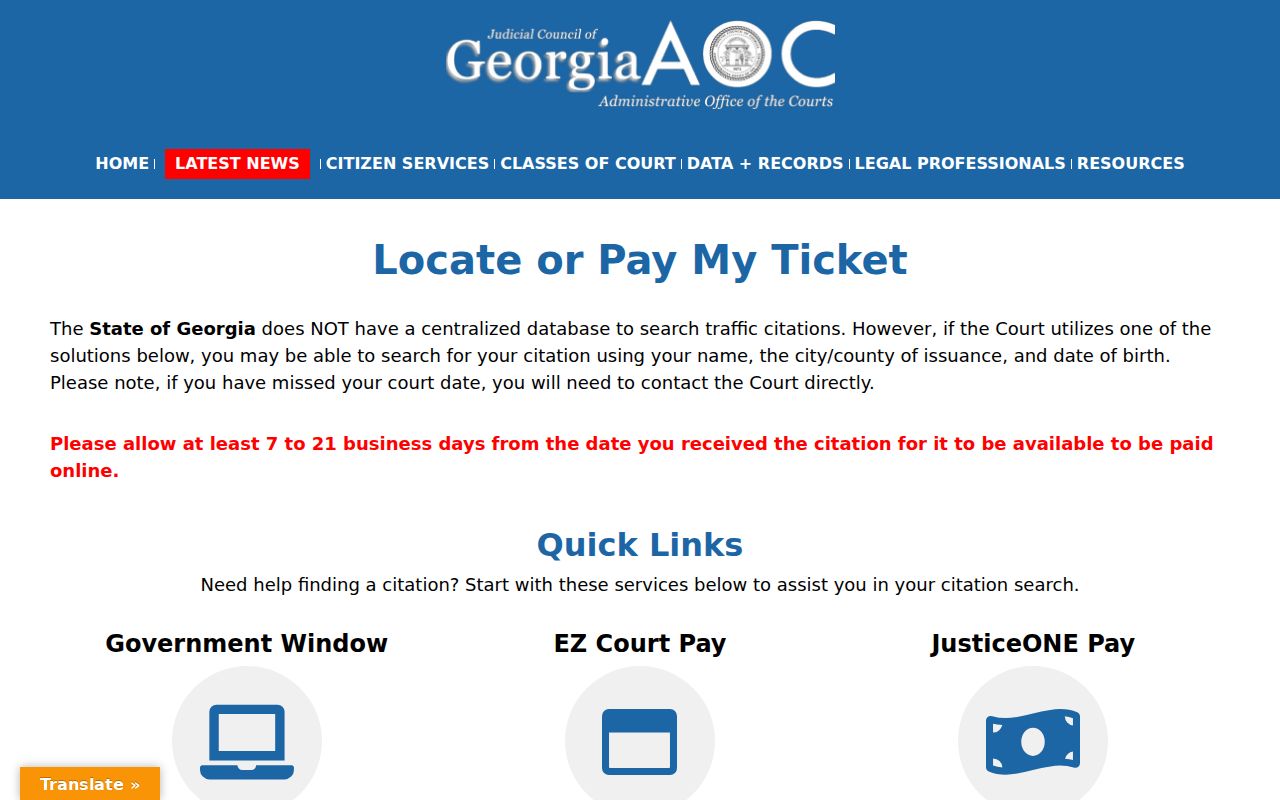
The screen only shows how a ticket routes. It does not confirm any warrant, so find the right Effingham County court or sheriff first.
What an Effingham County Warrant Search Returns
Effingham County publishes no sample result, so no local number format or live status can be described here. What an affected person typically learns from an authorized office is the issuing authority and the next required step. Some details stay withheld, sealed, or buried in the court file.
| Identity | The person tied to the inquiry, checked against picture ID. |
|---|---|
| Warrant reference | An agency or court identifier, if releasable. NO PUBLIC SAMPLE |
| Category | County labels include criminal, bench, probation, juvenile, child support, and personal warrants. |
| Issuing court | The judge or court with power over dismissal or recall. |
| Status | Issued, active, served, recalled, dismissed, and removed are distinct events. |
| Bond or hold | Booking staff may address release terms and other detainers. |
The issuing court's entry carries more weight than any label. In Effingham County, only that court or its judge can dismiss the warrant.
Request Effingham County Process Records
The Georgia Open Records Act opens many administrative records, with exemptions and redaction allowed. A request can seek the current warrant policy, blank service sheets, retention rules, fee rules, or monthly aggregate counts. Name the agency, the date range, the record type, and the format you want. Asking about another person's active status is a different request, and it may be denied or redirected. The county Open Records page lays out the Sheriff's request route. It documents policy and non-exempt records, though it cannot replace the in-person identification rule for a live warrant check.
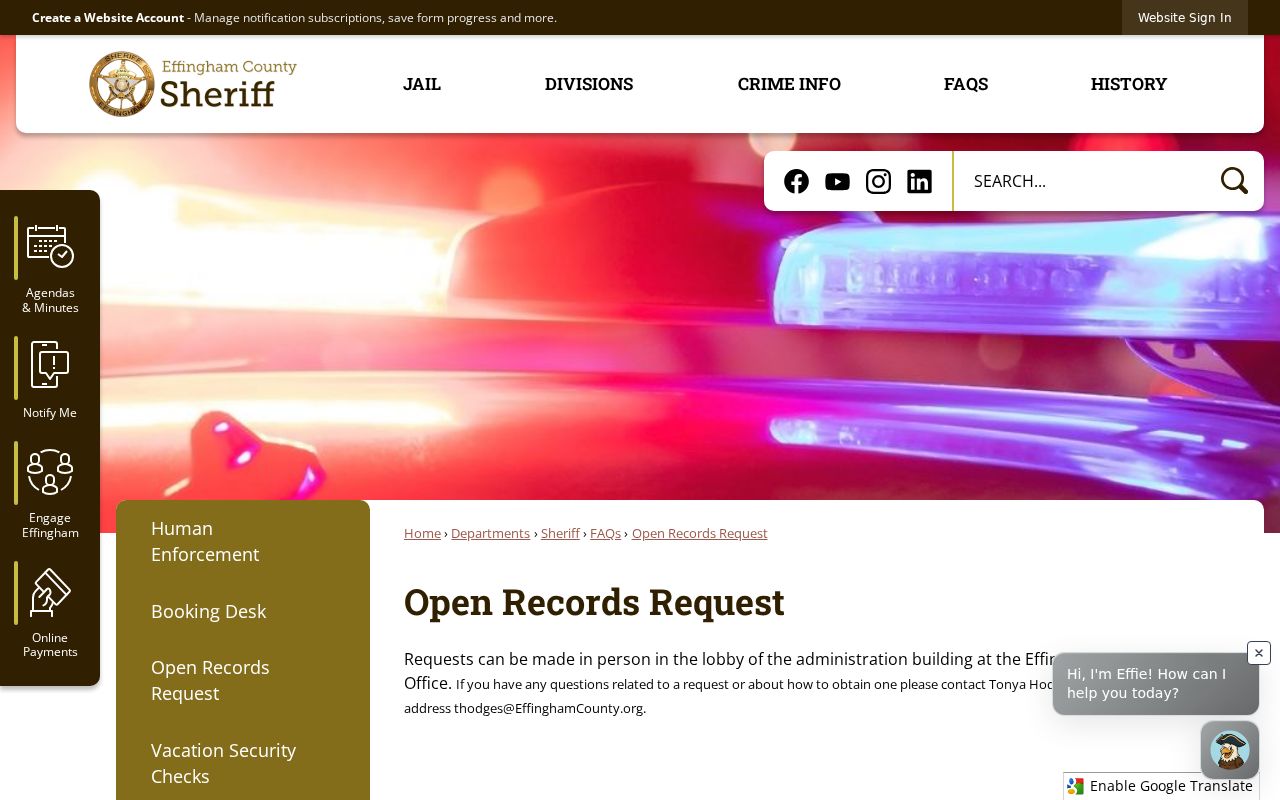
Open records can document Effingham County policy and non-exempt files. They do not override the in-person rule for an active warrant check.
Where Effingham County Warrants Are Checked
The Sheriff Warrant Division is the first stop for a person's own active-status question in Effingham County. The Clerk of Superior Court keeps Superior and State Court records and links to docket tools. State Court covers misdemeanors and traffic within its authority. Magistrate Court handles preliminary criminal functions, bail in assigned cases, and pre-warrant or bad-check processes. Juvenile matters run through confidential court or authorized DJJ routes. Rincon, Springfield, and Guyton each maintain their own municipal ordinance and traffic dockets. Their payment tools are not county criminal-warrant searches. Federal matters go to the Savannah Division of the Southern District of Georgia, where PACER may show public dockets, though sealed warrants stay hidden. Hearings have their own route, and the Sheriff hearing page lists it.
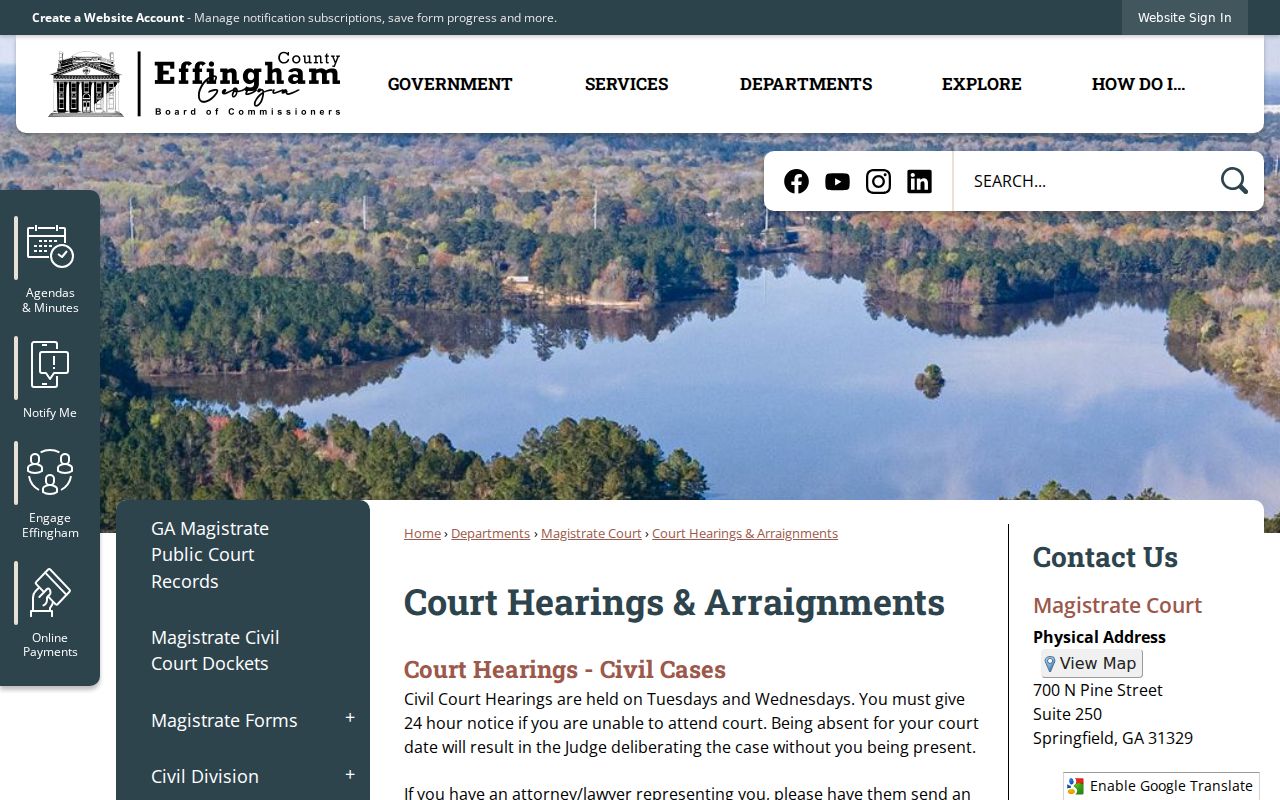
Use the court named on the papers, not an Effingham County building chosen by guesswork.
Effingham County Warrant Status Terms
A status term marks one moment in a process. It answers few legal questions by itself. Effingham County's pages and Guyton's public procedure show that service, court dismissal, and system removal can happen at different times.
- Issued
- A court or judge has authorized the warrant.
- Active
- The warrant remains available for enforcement.
- Served
- Law enforcement executed it; the court case may continue.
- Recalled or dismissed
- The issuing court took formal action.
- Removed
- An agency updated a law-enforcement system after service or cancellation.
Hold onto every court order, bond paper, and clerk receipt you receive. Then have the issuing court and the right Effingham County office confirm the warrant status changed.
Why Effingham County Names May Not Appear
A blank result proves very little. Effingham County publishes no official warrant roster, so a name can be absent for reasons that have nothing to do with innocence of paperwork. The warrant may be new, sealed, tied to a municipal docket, or held by another county entirely. Some are restricted because they involve a juvenile or an open investigation. A traffic failure to appear can generate court and DDS records without ever reaching a public sheriff listing. A court docket is not a full warrant index either. Dockets show hearings and outcomes, while sealed material stays hidden from view. For residents checking their own matter, the sound order is the Sheriff’s personal inquiry first, then the issuing court file, and finally any separate DDS or federal route that fits. Silence in one channel is not Effingham County clearance across the board.
Immediate consequence: Georgia warns that a person who appears for a warrant inquiry may be taken into custody if an active warrant is confirmed.
Access and Restricted Warrants
The Georgia Open Records Act guide lays out public access, a three-business-day response framework, and the lawful exemptions. O.C.G.A. § 50-18-72 lets agencies withhold or redact protected law-enforcement, personal, and security material. Getting a record does not entitle you to every field in it. Juvenile records get extra shielding in Effingham County and statewide. The Attorney General’s exceptions guidance cites O.C.G.A. § 15-11-708(b), and Georgia DJJ will neither confirm nor deny that a youth is in its system.
Key rules:
Sealed and protected warrant material does not become public merely because a request is filed.
Juvenile names, photos, identifiers, and allegations should not be published.
Absence from a public docket is not proof that no Effingham County warrant exists.
Note: Ask the agency to cite the legal basis for withholding and release segregable, non-exempt parts when allowed.